
Stronger Readers Start with Instruction That Works
When we supported the launch of the DC Public Schools (DCPS) Reading Clinic in 2018, early literacy data signaled a clear challenge: despite the district’s upward trajectory in reading achievement, many students were not meeting grade-level literacy expectations, and one in five students struggled with a reading disability. At the same time, many K-2 teachers lacked formal preparation in identifying and addressing difficulties, with only 28% of teacher preparation programs adequately covering all five components of science-based reading instruction.
Research shows that students behind in reading at the end of first grade have just a one-in-eight chance of catching up. DCPS identified an urgent need for earlier, more targeted intervention.

At the time, the DCPS Reading Clinic prioritized two goals; supporting struggling readers with intensive, individualized learning plans, and supporting teachers with thorough, evidence-based training. The initiative paired K-2 students with teachers and mentors for diagnostic-based instruction grounded in structured literacy, with lessons driven by ongoing assessment, progress monitoring, and clear goals. Meanwhile, a cohort of teachers participated in year-long coursework and received regular coaching support through modeling, side-by-side teaching, and observations to strengthen practice and deepen impact.
In doing so, the clinic strengthened capacity of literacy teachers across DCPS, which, for a district with an impressively low teacher turnover rate, also represented a long-term investment.
The DCPS Reading Clinic continues to prioritize high-impact tutoring and intensive educator coaching. Over time, the program has evolved to support not only classroom teachers, but also co-teachers, instructional leaders, and more recently, secondary educators and students—helping to build schoolwide literacy expertise across the district. Tutoring is used as not only support for students, but also as a strategy for building the teacher expertise–and it is working
What We’re Learning
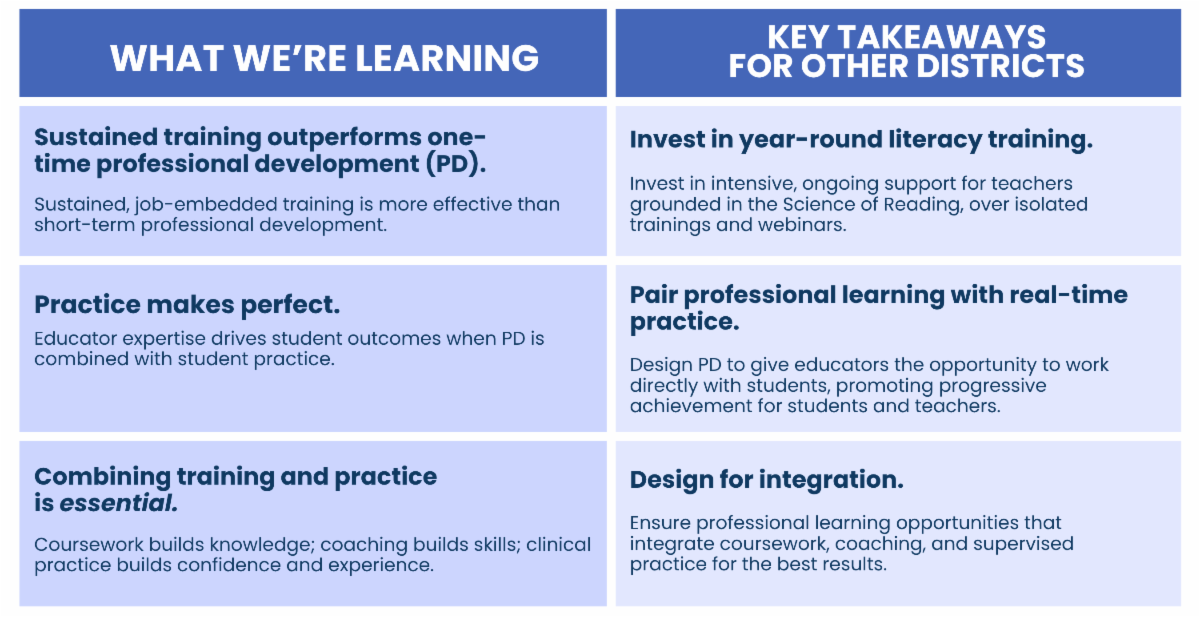
The success of the clinic demonstrates that strengthening teacher effectiveness can bolster student learning. To date, the initiative has trained more than 700 DCPS educators and staff, reaching more than 9,000 students. Students taught by clinic-trained teachers demonstrated statistically significant reading gains compared to their peers whose teachers were not clinic-trained.
In School Year 2024-2025:
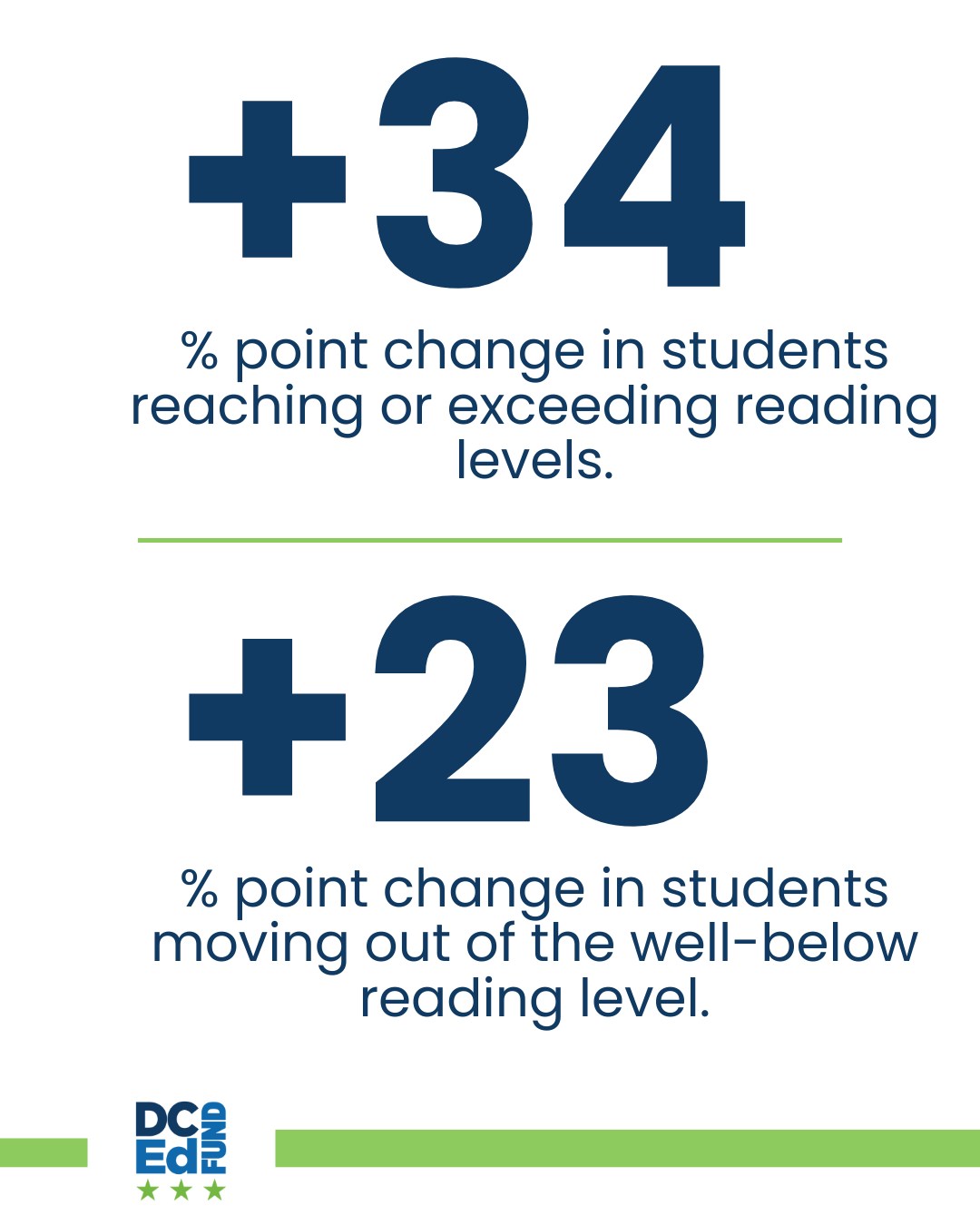
- The percentage of at-risk students reading below grade level dropped from 70% at the beginning of the year to 33% by the end of the academic year.
- Classrooms taught by clinic-trained teachers saw a 34-percentage point increase in students reaching or exceeding grade-level standards.
- Students in clinic-trained classrooms were 10.2% more likely to advance at least one benchmark level during the year.
- Students who began the year well below benchmarks were more likely to move up a reading level or meet grade-level expectations by the end of the year.
The results are clear: when teaching is strengthened through sustained practice and support, student outcomes improve significantly.
What’s Next
Building on these strong results, DCPS is focused on expanding access to the DCPS Reading Clinic to support more educators. Following the passage of legislation to address dyslexia in 2024, and based on recommendations from the DC Early Literacy Task Force, all kindergarten teachers must demonstrate structured literacy knowledge by the start of School Year 2026–2027. To meet this requirement for DCPS, the DCPS Reading Clinic trained all 300 kindergarten educators who have not already completed comparable coursework in School Year 2025-2026.
Over the past two years, the DCPS Reading Clinic has also expanded to strengthen literacy instruction in grades 3-12. With 25% of DC eighth graders scoring at or above benchmarks on the 2024 NAEP assessment, the need for strong, structured literacy practices in secondary settings remains clear. The DCPS Reading Clinic’s secondary program is the first in the greater DC region to offer specialized training in adolescent reading development paired with an in-person clinical practicum.
Scaling this model to new grade levels reinforces the core principle of this work: creating stronger readers does not end at short-term student intervention and requires comprehensive support.
| So, What Did We Learn? When we plan for both student growth and long-term instructional capacity, results are sustained and multiplied. |
This edition of What We’re Learning was led and authored by Michela Rynczak, Manager of Programs & Communications